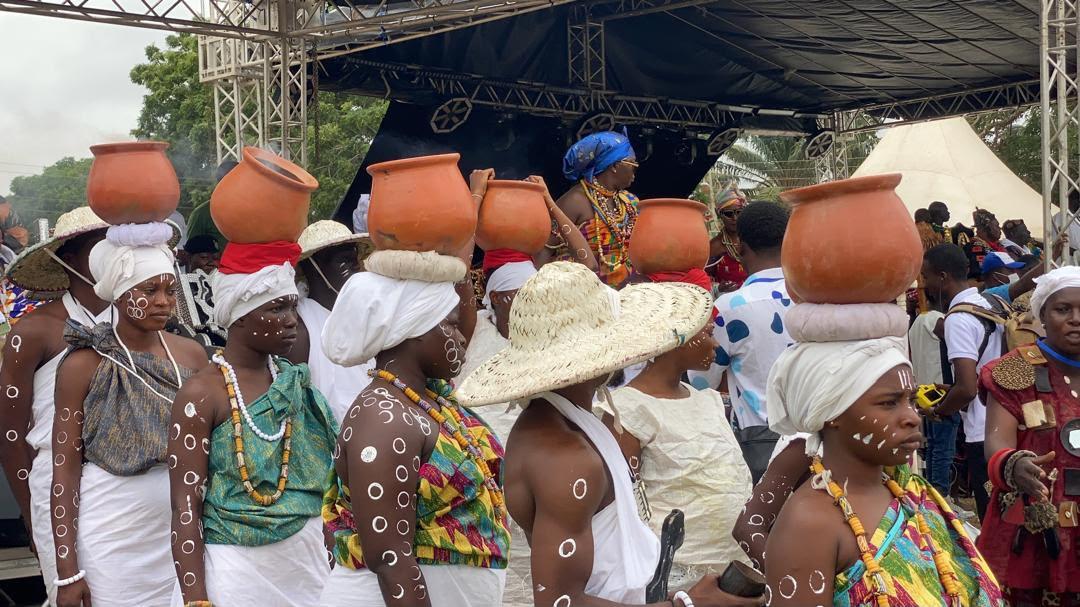
Ewe are one of Ghana’s major ethnic groups, with communities found across the Volta Region. Our identity has been shaped by centuries of migration, traditional leadership, ancestral veneration and oral traditions. The Volta Region comes alive through festivals that carry stories of Ewe migration, harvest, spirituality, survival, and community identity. Some remember journeys that began centuries ago. Others give thanks for the crops, rivers and landscapes that sustain communities today. For a traveler, these colorful celebrations are opportunities to step into the living history of the Ewe people and other communities of the Volta Region and experience traditions that remain meaningful to those who preserve them.
1. Hogbetsotso Za: Remembering the Anlo Exodus
- Who celebrates it: The Anlo people
- Where: Anloga
- When: First Saturday of November every year
- 2026 climax: Saturday, November 7
Few Volta festivals carry a historical story as recognizable as Hogbetsotso Za. Celebrated at Anloga, the traditional and ritual capital of Anlo, the festival commemorates the remembered exodus of the Anlo people from Notsie, in present-day Togo, and their eventual settlement in the Keta area. According to Anlo oral tradition, the people escaped the reign of King Agorkoli by weakening a section of the city’s fortified wall and leaving through it. The famous story says they walked backwards so that anyone following their footprints would be misled into believing they had gone back into the city. Hogbetsotso is also a period of reconciliation and purification. Traditional activities precede the grand durbar, where chiefs and people gather in elaborate regalia amid drumming, dancing and cultural performances.
2. Asogli Te Za: When Ho Gives Thanks for the Yam Harvest
- Who celebrates it: The people of Asogli State
- Where: Ho and surrounding Asogli communities
- When: Traditionally September, with the annual program announced by the Asogli Traditional Council
- 2026: August 12 to October 4, with the grand durbar on October 3
The Asogli Te Za, popularly known as the Asogli Yam Festival, is a harvest celebration centered on ete, the Ewe word for yam. According to Asogli oral tradition, the story of yam cultivation began during a famine as the people migrated. A hunter searching the forest for food came across a piece of yam, planted it in a mound, and later returned to find a fully grown tuber that fed his people. The festival is therefore a celebration of the harvest and an occasion for thanksgiving, prayer, reconciliation and the reaffirmation of allegiance to the Asogli traditional state.
Its traditional observances include the preparation and presentation of the new yam before public celebrations begin. By custom, it is taboo for indigenes of the Asogli community to eat yams from the new harvest until the prescribed rites have been performed. The newly harvested yams are not taken to markets either until the traditional leaders have completed the necessary rituals, formally ushering in the new yam season.
Today, Te Za has developed into a major cultural program featuring a grand durbar, traditional and cultural performances, development initiatives and gatherings of chiefs. The traditional period is September, but travelers should follow the annual program announced by the Asogli Traditional Council rather than rely on a fixed date.
3. Danyigbakaka: Kpando’s Migration Mystery
- People: The Akpini people of Kpando
- Where: Kpando
- Traditional period: August/September
- Frequency: Traditionally biennial, although the festival was not celebrated in the past few years
Danyigbakaka recalls a defining moment in the migration of the Akpini people from Notsie to their present home in Kpando. Oral tradition tells of a difficult crossing of the overflowing Dayi River, which had become too dangerous to cross. At this critical moment, a python is said to have appeared across the river, enabling the migrating people to make their way safely to the other side. Once the crossing was complete, the python mysteriously disappeared.
Other surrounding communities such as the Tafi people also celebrate this festival, commemorating the crossing of the Dayi River with the help of a mystery python. The people regard the event as a sign of divine assistance during their migration and give thanks to the spiritual forces and ancestors believed to have guided them throughout their migration.
4. Gbidukorza: The Festival That Reunites Two Communities
- Who celebrates it: Gbi-Dzigbe of Hohoe and Gbi-Nyigbe of Peki
- Where: Alternates between Hohoe and Peki
- When: Usually toward the end of the year; exact dates announced annually
- 2026: December 4–8 in Hohoe
Gbidukorza has a different story from the region’s harvest festivals. It is fundamentally a festival of reunification. The Gbi people trace their history through migrations that eventually separated the communities now known as Gbi-Dzigbe in Hohoe and Gbi-Nyigbe in Peki. Although they remained connected by ancestry, historical movements left the two communities separated by considerable distance.
The desire to restore that relationship eventually produced a formal reunification movement. In 1988, citizens from both communities began organizing around the idea of renewed unity, and in 1995 the annual Gbidukorza was established. The festival rotates between Hohoe and Peki. Its program includes a welcome ceremony, grand durbar, state dance, thanksgiving and development activities. The 31st Gbidukor Festival will be hosted in Hohoe from December 4 to 8, 2026.
5. Agortime Kente Festival: Exhibition of Woven Heritage and Livelihood
- People: The Agortime people
- Where: Agortime Kpetoe
- Traditional period: August
- 2026: Saturday, August 15
The Agortime Kente Festival celebrates the Ewe weaving tradition and the cultural and economic importance of kete or agbamevor, the Ewe terms for the handwoven cloth commonly known as kente. Kente is handwoven in narrow strips and assembled into larger cloths, with colors, geometric forms and patterns carrying meanings that can express ideas, values, history and proverbial wisdom. Some patterns are created to communicate particular messages, making the cloth a form of visual storytelling as well as dress.
The modern Agortime Kente Festival was instituted in 1995 to promote and preserve the weaving heritage of Agortime. Today, it brings together learner weavers, master weavers, chiefs, community members and visitors through cultural displays, exhibitions and celebrations of kente as both living heritage and an economic resource.
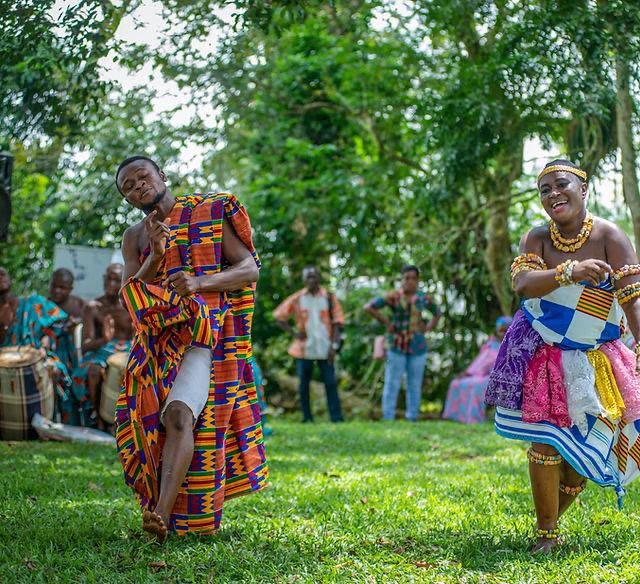
Similarly, the people of Tafi Abuife celebrate our rich weaving heritage at the annual Tafi Kente-Keporte Festival in September. Local oral tradition traces the origins of kente weaving in the community to an ancestral hunter who once observed a spider spinning its web in the forest. Fascinated by the intricate patterns, the hunter drew inspiration from the spider’s work and developed a weaving craft that has become a defining part of Tafi Abuife’s cultural identity and remains an important source of livelihood for its people.
6. Tortsogbeza: The Festival of the River Crossing
- Who celebrates it: The people of Sokpoe Traditional Area
- Where: Sokpoe, South Tongu
- When: Easter period
- 2026: Saturday, April 4
Tortsogbeza literally means “river crossing festival” and recalls the journey of the Sokpoe people from Notsie to their present home. According to the community’s traditional history, their ancestors moved from Notsie to Penyi, then to Anaglime in the Fevie area, before eventually crossing the Volta River to settle at Sokpoe. The festival keeps this migration story alive through a ceremonial re-enactment of the crossing.
The ceremony begins with traditional rites and libation at the river before the crossing. The 19 clan heads, each representing a clan of the traditional area, make the journey by canoe, accompanied by drumming, dancing and other traditional displays. The occasion is both a remembrance of the ancestors’ migration and an expression of gratitude to God and the ancestors for guiding them to their present home.
7. Norvikporgbeza: A Coastal Festival of Community and Renewal
- Who celebrates it: Communities including Kedzi, Havedzi and Horvi
- Where: Keta Municipality
- When: Easter period
- 2026: Saturday, April 4
On Ghana’s southeastern coast, Norvikporgbeza brings communities together around traditional rites, reconciliation, cultural identity and development. The festival is particularly associated with the Kedzi, Havedzi and Horvi communities. Its Easter-period celebration provides an opportunity for people to return home, reconnect with family and community and participate in traditional activities. Like Tortsogbeza, its date is linked to Easter and therefore changes annually. In 2026, the celebration took place on April 4.
8. Afenorto: Mepe’s Festival of Heritage and Development
- Who celebrates it: The people of Mepe Traditional Area
- Where: Mepe, North Tongu
- When: August; exact program announced annually
- 2026: Grand durbar on August 8
Afenorto is the annual festival of Mepe and one of the region’s longstanding cultural gatherings. The festival brings together traditional authorities, families, residents and people of Mepe from elsewhere to celebrate heritage, strengthen unity and address community development.
Its modern significance goes beyond the cultural program. Festivals such as Afenorto have become important occasions for discussing education, infrastructure, investment and other development priorities. The 70th Afenorto Festival in 2026 placed particular attention on post-flood recovery, investment and sustainable development following the Akosombo Dam spillage. Its grand durbar was held on Saturday, August 8, 2026.
9. Agbeliza: Avenor’s Cassava Festival
- People: The Avenor people
- Where: Avenorpedo
- Traditional period: August
- 2026: August 29
Agbeliza is the cassava festival of the Avenor people, centered on agbeli, the Ewe word for cassava. Cassava became so important to Avenor farming and food culture that it gave the festival its name. The celebration began in 1987 and traditionally features display of cassava products such as gari, tapioca, yakayake and cassava chips, while outstanding cassava farmers are recognized.
Beyond the harvest, Agbeliza has become a time for community gathering and development. The 2026 festival, its 39th edition, was held on August 29 and included cultural and sporting activities alongside efforts to support local health facilities.
10. Sasadu Festival: Four Communities, One Ancestral Heritage & Homecoming
- People: The people of Sovie, Alavanyo, Saviefe and Akrofu
- Where: Rotates among the four communities
- Traditional period: October
- Date: Announced annually
Sasadu brings together Sovie, Alavanyo, Saviefe and Akrofu, four communities whose traditional histories trace their shared ancestry to Sakome in Notsie, before the Ewe migration from Notsie. The name SASA comes from the four communities, while the wider SASADU union was created to preserve their traditional fraternity and strengthen their cultural and social ties. Historical records date the initiative to 1948.
Sasadu, more than a colorful gathering, is a homecoming of sorts, giving people whose ancestors once formed one community an opportunity to renew their bonds through a grand durbar, traditional music, dance and other cultural activities. The celebration rotates among the four communities, bringing the shared heritage of the SASADU people into focus each year.
11. Amu Festival: Avatime’s Mountain Brown Rice Heritage
- People: The Avatime people
- Where: Avatime Traditional Area
- Traditional period: Around the rice harvest, usually November
- Date: Announced annually
High in the mountains of the Volta Region, the Avatime people have preserved a distinctive agricultural heritage around amu, their traditional brown rice. According to Avatime tradition, their ancestors carried the rice seed with them during their migration from Ahanta and preserved it until they settled in the Avatime area. Over generations, the crop became a staple and an important marker of Avatime identity.
That connection gave rise to the Amu Festival, which brings the seven Avatime communities together around their shared rice heritage. Today, the Avatime Traditional Area comprises seven communities: Amedzofe, Gbadzeme, Vane, Dzogbefeme, Biakpa, Fume and Dzokpe. Historically, the rice harvest was accompanied by traditional rites connected with Ayamapor, associated with fertility and successful cultivation. At harvest time, customary rites were performed before the new rice was formally introduced, followed by celebrations marking the arrival of the new grain and a new season.
Come Celebrate With Us
If you think festivals are just about drumming, dancing, and colorful clothes, the Volta region might have a surprise in store for you. Here, celebrations have interesting stories and cultural traditions to share, and there’s always something new to discover. You might come for the music, stay for the food, but find yourself caught up in listening to native stories that make your jaw drop in amazement.
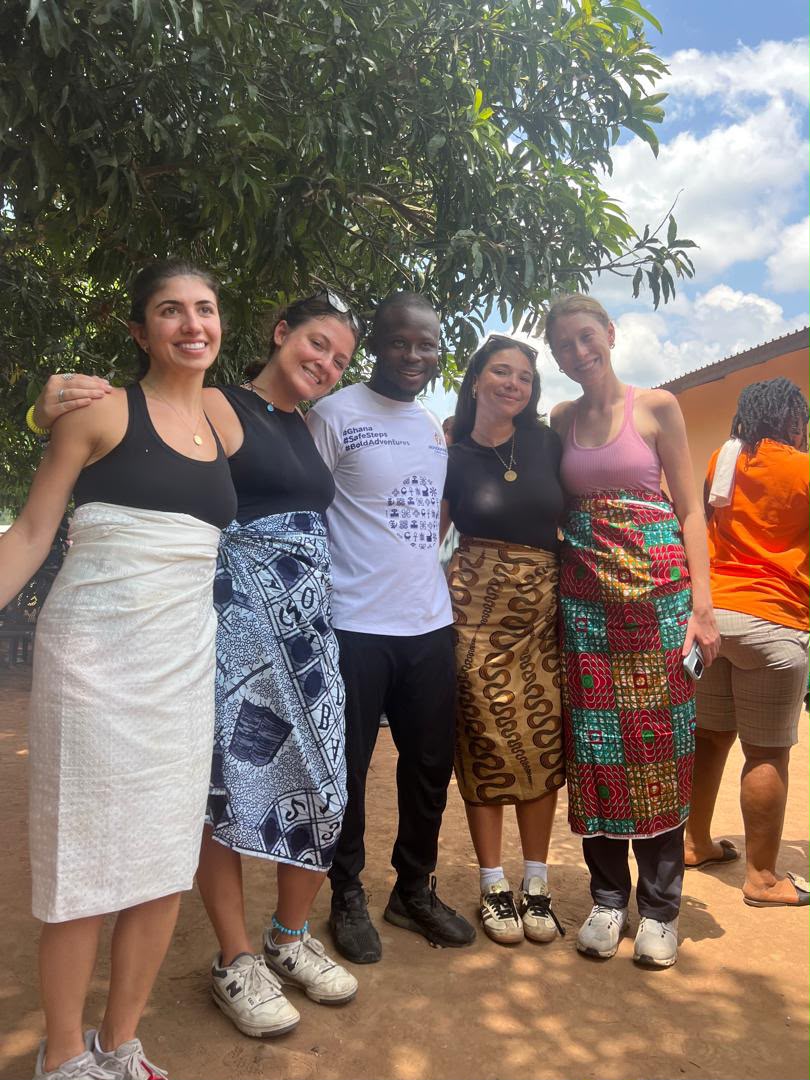
So when are you visiting the Volta Region? Come during festival season and experience these celebrations among the people who make them special. Eat with us, dance with us, listen to our stories, and discover places you may never have heard of. Just don’t be surprised if one visit leaves you wanting to return. The Volta Region has plenty more to show you.
Miawoezor. Book your authentic Ghana cultural tours with us on WhatsApp: +233 54 541 0465